The Birth of a Hustler
- jugramk
- Sep 2, 2024
- 3 min read
Updated: Jan 7, 2025
Charlestown is a small town in Kwazulu-Natal situated firmly between Volksrust and Newcastle with a population of less than 5000 people. It initially served as a railway station and customs post between Natal and what was then the Transvaal province. However, after the union of South Africa in 1910, the customs post closed down and the railway yards were relocated into Volksrust. Resultingly, there was an exodus of the town's white population, leaving behind abandoned homes and a decimated tax base meant to uphold the town. It was thus out of desperation that the Town Board allowed Black and Indian people to own property in Charlestown. My great-grandfather was one of these people. However such ownership rights were not to last due to the inception of apartheid in 1948. Under apartheid policy, the Group Area's Act resulted in the forced removal of most of Charlestowns Black and Indian population in the 1960's. The former were relocated to Madadeni near Newcastle while the latter were moved to a township called Lennoxton within Newcastle. My grandfather -who had spent his entire early life in poverty in Charlestown- was one of those Indians. Charlestown subsequently became a ghost town.

My great-grandfather's grave is situated in the heart of Charlestown's informal settlement. On the left lies a mosque housing Muslim graves. To the right is a cluster of huts.

Snowy's Biltong is a white-owned business that was initially built by my grandfather as a general goods store. It has been heavily renovated since my grandfather's forced removal.
But while injustice set the foundation for my Grandfather's legacy, his ending would be marked by a home of his own and two university-educated children. Like so many South Africans born in poverty, he had migrated from a rural home of little opportunity to the city with hopes of finding success.

The story of rural origins is a common one in the South African tale of success.

Most of Charlestown's infrastructure remains informal or in various stages of decay from the Apartheid era.
I initially arrived in Charlestown with the expectation of finding a ghost town testament to Apartheid's legacy of marginalization and discrimination. However, through spaza shops, scenes of everyday life, and the scenery of rural Kwazulu-Natal I found a reflection of my grandfather's origin story as a hustler- one symbolic of the tale of many hustlers.

I arrived in Charlestown as the second generation of my family firmly detached from our rural origins. As I walked through the community with an urban swagger and flashy camera, I caught glimpses of what life was like before my Grandfather moved to Newcastle.

Charlestown remains a community despite its history of forced removals.
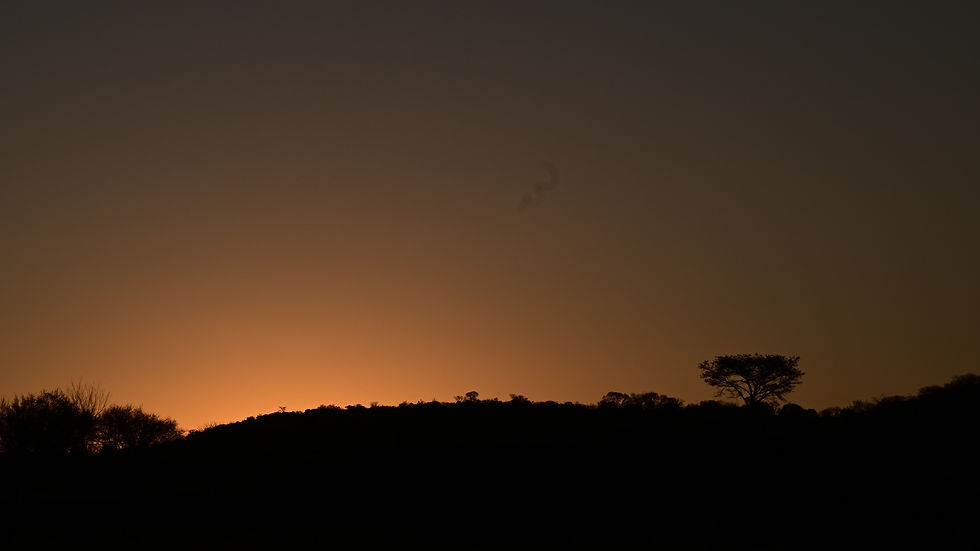
The sunset remains unpolluted in Charlestown, untainted by the haze of urban life.
Despite the label and appearance of a ghost town, Charlestown is home to a community of both black and Indian people- just like before the forced removals over 60 years ago. Children fill the dusty streets with noise and friends populate local spaza shops as hangout points. My grandfather started his legacy with one of these small businesses over 60 years ago. Today, such small shops are once again scattered across Charlestown amidst
noisy children, laboring fathers, and quarreling families. In the indomitable spirit of Charlestown lies the birth of family legacies- just as it was so with my grandfather.

Boys play soccer on the flatland in front of their homes.

A mother and son quarrel outside their family home.

A family runs a spaza shop from their front yard.

Two friends meet outside an old spaza shop after a long day of work.


Comments